
Long before modern weather apps and Doppler radar, Clevelanders learned the hard way that Lake Erie weather doesn’t follow the calendar.
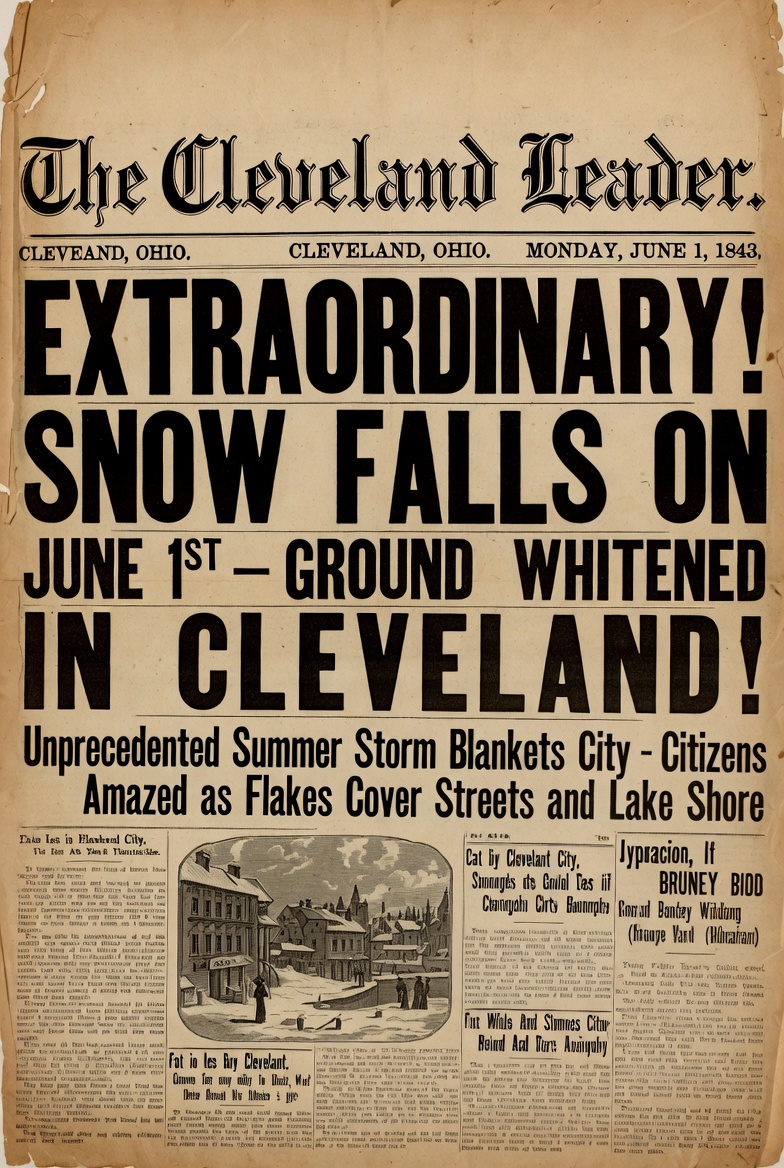
On June 1, 1843, snow actually fell in Cleveland — enough to whiten the ground, especially a short distance back from the lake shore.
Meteorological records from the era, kept by observer E. Loomis, confirm the rare early-summer event. It came during one of the coldest Junes on record for the region, part of a broader pattern of unseasonably chilly weather that gripped the Northeast and Midwest that year. While it wasn’t a heavy accumulation, the sight of snowflakes in June left a lasting impression on a young city still finding its footing along the lakeshore.
In the 1840s, Cleveland was a growing port town of just a few thousand residents. Most homes were simple frame or brick structures, and daily life revolved around shipping, small farms, and trade via the Ohio & Erie Canal. A June snowstorm would have been the talk of Public Square and the waterfront — farmers worrying about crops, sailors bundling up on the docks, and families probably sharing a laugh (or a groan) over the latest trick from “Old Lake Erie.”
This wasn’t an isolated freak occurrence. The entire month stayed unusually cool, with temperatures struggling to climb out of the 50s and 60s on many days. It served as an early reminder of something Clevelanders have come to accept nearly two centuries later: pack layers, no matter what the date on the calendar says.
Today, the event lives on as a favorite piece of local weather lore — proof that when it comes to Cleveland climate, expect the unexpected.
Cleveland weather has always had a mind of its own.
For more local history, weather oddities, and neighborhood stories, keep reading The Cleveland Leader.